Japanese Glutinous Rice: The Sticky Wonder Behind Traditional Japanese Delicacies
Japanese glutinous rice, also known as sticky rice or mochigome, is a staple in Japanese cuisine that has captivated taste buds for centuries. With its fascinating history, distinct origin, unique features, various types, interesting facts, and versatile culinary uses, Japanese glutinous rice holds a special place in the hearts and palates of food enthusiasts.
History and Origin
The cultivation of glutinous rice in Japan dates back to ancient times, with records indicating its presence as early as the Yayoi period (300 BC to 300 AD). It is believed that the rice was introduced to Japan from China and Southeast Asia. Over time, it became an essential ingredient in Japanese cuisine, particularly for traditional dishes like mochi (rice cakes), onigiri (rice balls), and sushi.
Features and Types
Japanese glutinous rice stands out from regular rice due to its sticky and chewy texture. This unique characteristic is attributed to the higher amylopectin content in the rice grain, which results in its stickiness when cooked. There are several types of Japanese glutinous rice, including mochigome, which is specifically cultivated for making mochi, and uruchimai, which is a versatile variety used for sushi, rice balls, and other Japanese dishes.
Interesting Facts:
– Glutinous rice is often associated with special occasions and festivals in Japan, such as New Year celebrations and the annual mochitsuki (mochi pounding) ceremony.
– Japanese glutinous rice is traditionally steamed or cooked in a special pot called a “kamado” to achieve the desired sticky consistency.
– In addition to its culinary uses, glutinous rice is also used in religious rituals and ceremonies in Japan.
Culinary Uses
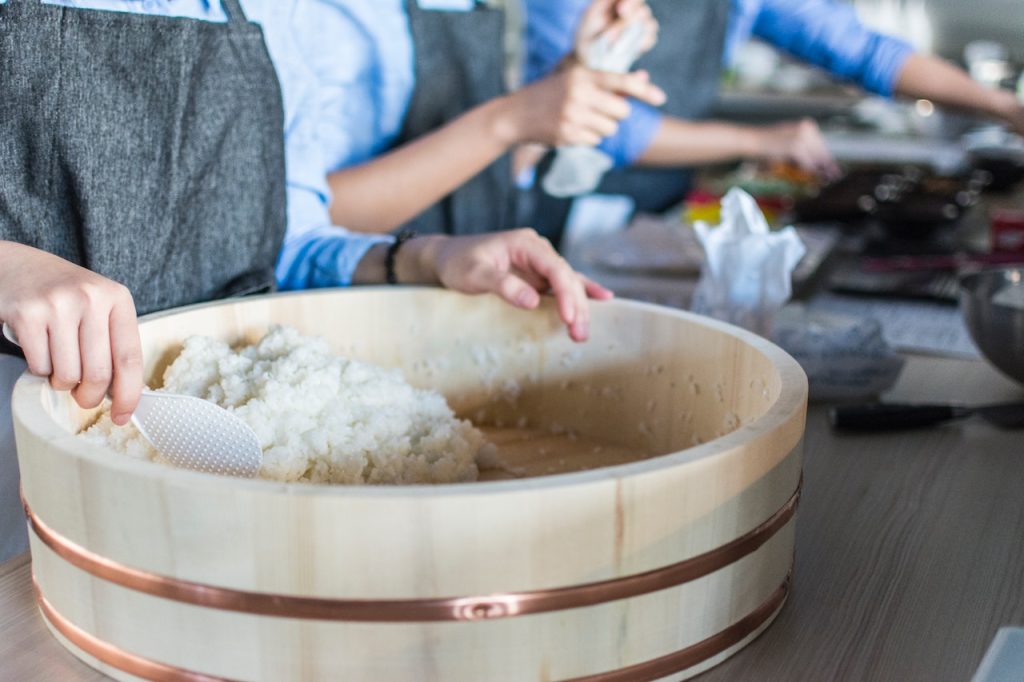
Japanese glutinous rice offers a wide range of culinary possibilities. It serves as the foundation for various traditional dishes, such as mochi, where the rice is pounded and shaped into soft, chewy cakes. Glutinous rice is also a key ingredient in onigiri, where it is shaped into triangular or cylindrical rice balls, often filled with savoury ingredients like grilled fish or pickled vegetables. Additionally, it is an essential component of sushi, providing the sticky texture needed to hold the ingredients together.
Apart from these traditional dishes, glutinous rice can be used in modern interpretations of Japanese cuisine, such as rice-based desserts, porridge, and even in fusion dishes that incorporate other international flavours.
In conclusion, Japanese glutinous rice is a cherished ingredient in Japanese cuisine, with a rich history and versatile culinary uses. Its sticky and chewy texture, combined with its ability to complement a variety of flavours, makes it an integral part of traditional dishes and a source of culinary creativity. Whether enjoyed in traditional mochi or in contemporary rice-based creations, Japanese glutinous rice continues to entice food lovers with its unique and delightful qualities.