
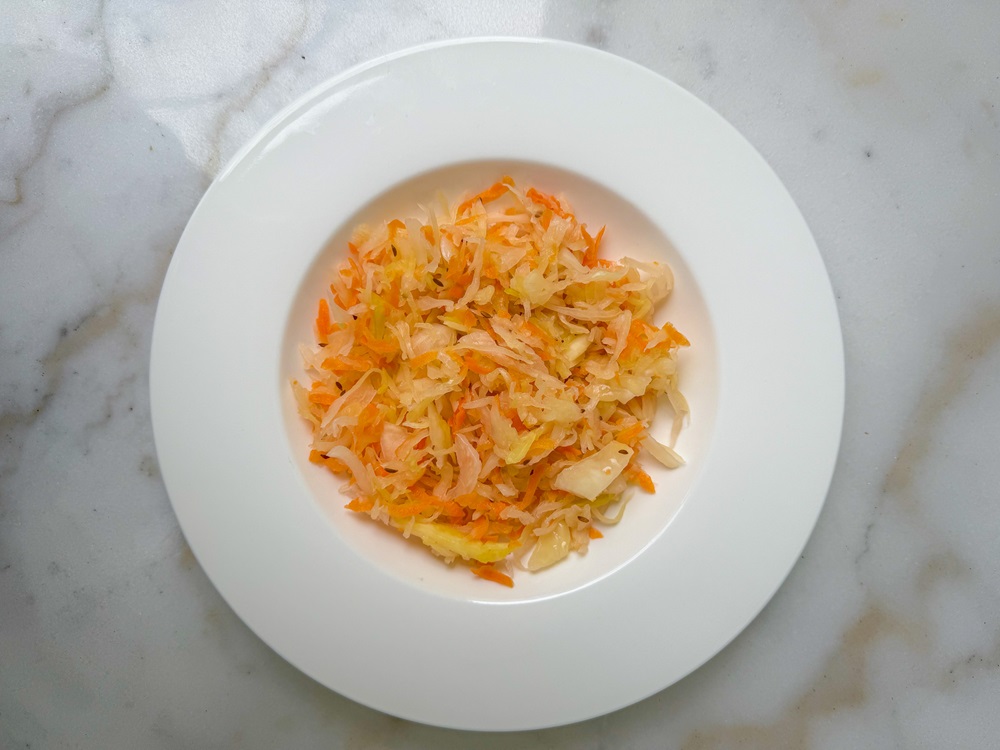
Traditional Fermented Sauerkraut
(Rauginti Kopūstai)
Fermenting cabbage is a time-honoured tradition in many cultures, including Lithuanian cuisine, where sauerkraut is a staple. This recipe captures the essence of simple, wholesome food preservation, yielding a tangy, crunchy side dish that pairs perfectly with meats, potatoes, or hearty soups. Packed with probiotics and rich in flavour, sauerkraut is as nutritious as it is delicious.
INGREDIENTS
2 kg cabbage
500 g carrots, grated
40 g salt (preferably coarse rock salt; avoid iodized salt as it can result in mushy sauerkraut)
Optional Add-ins:
Apples (chopped, to taste)
Cranberries (to taste)
Caraway seeds (a pinch, to taste)
For every kilogram of cabbage, you can add 200–300 g of apples and cranberries or a pinch of caraway seeds to enhance flavour.
METHOD
1. Prepare the Cabbage
Remove the outer leaves of the cabbage and trim off any damaged areas.
Finely shred or slice the cabbage using a sharp knife or mandoline slicer.
2. Mix and Season
Place the shredded cabbage in a large bowl. Add the salt and mix thoroughly.
Grate the carrots and mix them into the cabbage.
3. Add Optional Ingredients
If desired, mix in chopped apples, cranberries, or caraway seeds to elevate the flavour profile.
4. Pack the Cabbage
Firmly press the cabbage mixture into a clean fermentation vessel, ensuring no air pockets remain. A large crock or food-grade bucket works well.
5. Weigh It Down
Place a wooden or food-safe plate on top of the cabbage and weigh it down with a clean stone or another heavy object.
The cabbage should be submerged under at least 2 cm of its own liquid. If there isn’t enough liquid, add a small amount of salted water (1 teaspoon of salt per 250 ml of water).
6. Fermentation
Keep the vessel at a consistent temperature of 16–20°C (60–68°F). The sauerkraut will ferment over 8–10 days.
During fermentation, you may notice an increase in liquid. This is normal. Skim off any excess liquid and return it to the cabbage toward the end of fermentation.
If mold appears, scrape it off, sanitize the weights and cover with boiling water, then press the cabbage down again.
7. Gas Release
After 4 days, uncover the cabbage daily and pierce it several times with a sharp stick or skewer to release trapped gases.
8. Storage
Once fermentation is complete, store the sauerkraut in a cool place (such as a cellar or refrigerator) for an additional 2 weeks to deepen the flavour.
Enjoy your homemade sauerkraut as a nutritious side dish or ingredient in your favourite recipes.
Nutritional Information (per 100 g of sauerkraut)
Calories: 27
Carbohydrates: 6 g
Protein: 1 g
Fat: 0 g
Fiber: 2 g
Sodium: ~600 mg (varies by salt used)
Probiotics: Sauerkraut is rich in beneficial bacteria that support gut health.
A Taste of History
Fermentation has been a cornerstone of food preservation for centuries, particularly in regions with long winters, such as Lithuania. The word “sauerkraut” itself comes from German, meaning “sour cabbage,” but the tradition spans across Europe and Asia. In Lithuania, sauerkraut is often paired with hearty dishes like pork, sausages, or potatoes, bringing a tangy contrast to rich flavours.
This timeless process not only enhances the taste but also boosts the nutritional value of the cabbage, transforming it into a probiotic powerhouse. Embrace this ancient culinary art and bring a slice of history—and health—into your kitchen.
Try it today and taste the tradition!