Arepa Bread: Venezuela’s Iconic Culinary Treasure
Arepa bread, the cherished staple of Venezuela, stands as a testament to the country’s rich culinary heritage and a source of national pride. These delightful cornmeal patties, with their golden crust and soft interior, have become an integral part of Venezuelan cuisine. In this comprehensive exploration, we will journey through the fascinating history, the diverse array of varieties, intriguing facts, storage tips, and expert cooking guidance to unlock the secrets of Arepa bread, a culinary treasure loved both in its homeland and around the world.
A Glimpse into History
The origins of Arepa bread can be traced back over 2,000 years to the indigenous peoples of what is now Venezuela and Colombia. These early cornmeal cakes, made from maize (corn) and water, were cooked on hot stones or clay griddles. Over time, the Spanish introduced wheat flour, and Arepas evolved into the round, disc-shaped patties that are now cherished in Venezuelan culture. Today, Arepa bread is not just a beloved food but an enduring symbol of Venezuelan identity.
The Devoted Population
Arepa bread holds a special place in the hearts of Venezuelans. It’s not just a food; it’s a cultural icon, and Areperías (Arepa restaurants) are abundant throughout the country. The deep-seated appreciation for Arepas extends to Venezuelans living abroad, where these versatile creations continue to bring comfort and connection to their homeland.
Varieties of Arepa Bread
Traditional Arepa: Made from cornmeal, salt, and water, the traditional Arepa is a blank canvas, a versatile foundation for countless fillings and toppings. It’s often enjoyed plain or with butter and cheese.
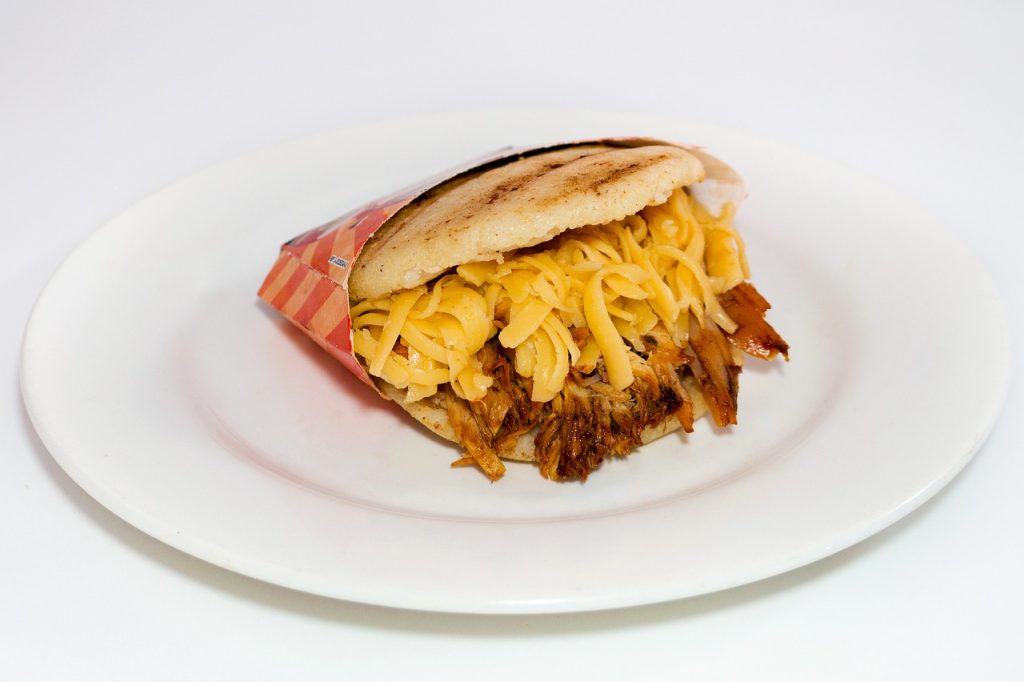
Reina Pepiada: A favourite Arepa filling, Reina Pepiada consists of shredded chicken, avocado, mayonnaise, and cilantro. It’s a rich and flavourful combination that celebrates Venezuela’s culinary diversity.
Pabellón: Pabellón Arepas are inspired by the national dish of Venezuela, Pabellón Criollo. They feature shredded beef, black beans, white cheese, and fried plantains. The contrasting flavours and textures make this Arepa a true delight.
Interesting Facts
A Popular Breakfast Option: In Venezuela, Arepas are often served for breakfast. They can be paired with an array of accompaniments, including cheese, ham, eggs, and more.
Variations Across Latin America: Arepas have regional variations not only in Venezuela but also in neighbouring countries like Colombia. Colombian Arepas, while similar in appearance, are made from white cornmeal and tend to be thinner.
Versatility: The beauty of Arepa bread lies in its adaptability. It can be stuffed with savoury or sweet fillings, making it suitable for breakfast, lunch, dinner, or dessert.
Storage Information
To keep Arepa bread fresh and maintain its delightful texture:
Refrigeration: Store leftover Arepas in an airtight container in the refrigerator. They can be stored for up to three days.
Freezing: Arepas can also be frozen for longer storage. Wrap them individually in plastic wrap and place them in a resealable bag. Frozen Arepas can be reheated directly from the freezer in a hot oven or toaster.
Cooking Tips
Achieving the perfect Arepa requires some finesse:
Use Precooked Cornmeal: Traditional Arepas are made with precooked cornmeal, also known as masarepa or harina pan. This specific type of cornmeal ensures a tender interior and a crisp exterior.
The Right Water-to-Cornmeal Ratio: The ideal water-to-cornmeal ratio is critical. It should create a smooth, pliable dough that is not too dry or too sticky.
Shape and Thickness: Shape Arepas into smooth discs of even thickness, typically around 1/2 to 3/4 inch thick. This ensures even cooking.
Dry Griddle or Pan: Cook Arepas on a dry griddle or non-stick skillet over medium heat. No oil is needed. They are ready when both sides develop a golden crust.
Arepa bread, with its fascinating history, devoted population, diverse varieties, and undeniable versatility, is a culinary gem that transcends borders and brings joy to many around the world. Whether enjoyed plain with a touch of butter, or bursting with an array of delectable fillings, Arepas are a symbol of comfort, connection, and heritage. By understanding the history, appreciating the regional varieties, and mastering the art of Arepa-making, you can savour the warmth and flavour of Venezuela, one delicious bite at a time.